AUTHORING & APPLIED AI
An editor that belongs to the product.
Structured documents, customer references, and reviewable writing assistance live in the same working surface.
The problem
worth solving.
A business document often needs more than formatted text. It must carry context, reuse structure, and support the decisions that happen before someone shares or acts on it.
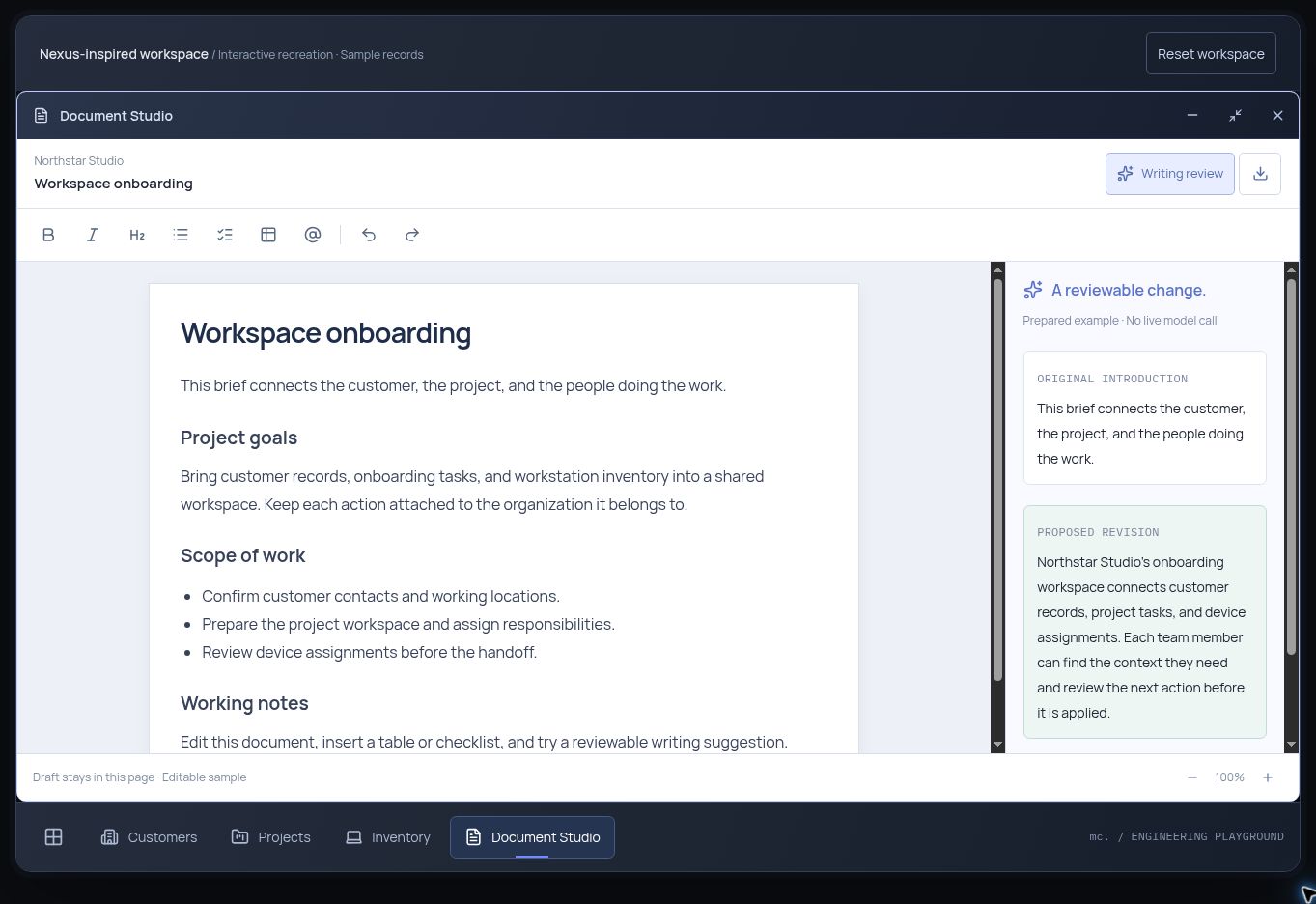
Owner and architect of Nexus RMM. This study examines the Notes canvas, TipTap toolbar, customer-linked content, and AI preview/apply interaction.
THE ENGINEERING
Decisions behind
the experience.
Build on structured editing.
TipTap and ProseMirror provide a document model for rich text, tables, and checklists. Custom extensions add application-specific references without turning the document into an unstructured text field.
Compose the authoring surface.
The document, toolbar, contextual actions, and review panel have separate responsibilities. Each can evolve without becoming a single oversized editor component.
Make the proposed change visible.
A suggestion is separate from its application. The user can inspect the original and replacement, dismiss the proposal, or accept it. A stale proposal cannot overwrite a document that changed during review.
TAKE IT FOR A SPIN
See the behavior
for yourself.
- Edit the brief and insert headings, tables, or a checklist.
- Insert a reference to the selected customer.
- Preview a prepared writing suggestion, accept or dismiss it, and undo an edit.
The editor and its changes work locally. Writing suggestions are explicitly prepared examples; they do not run a live model. Downloads contain the document text.